
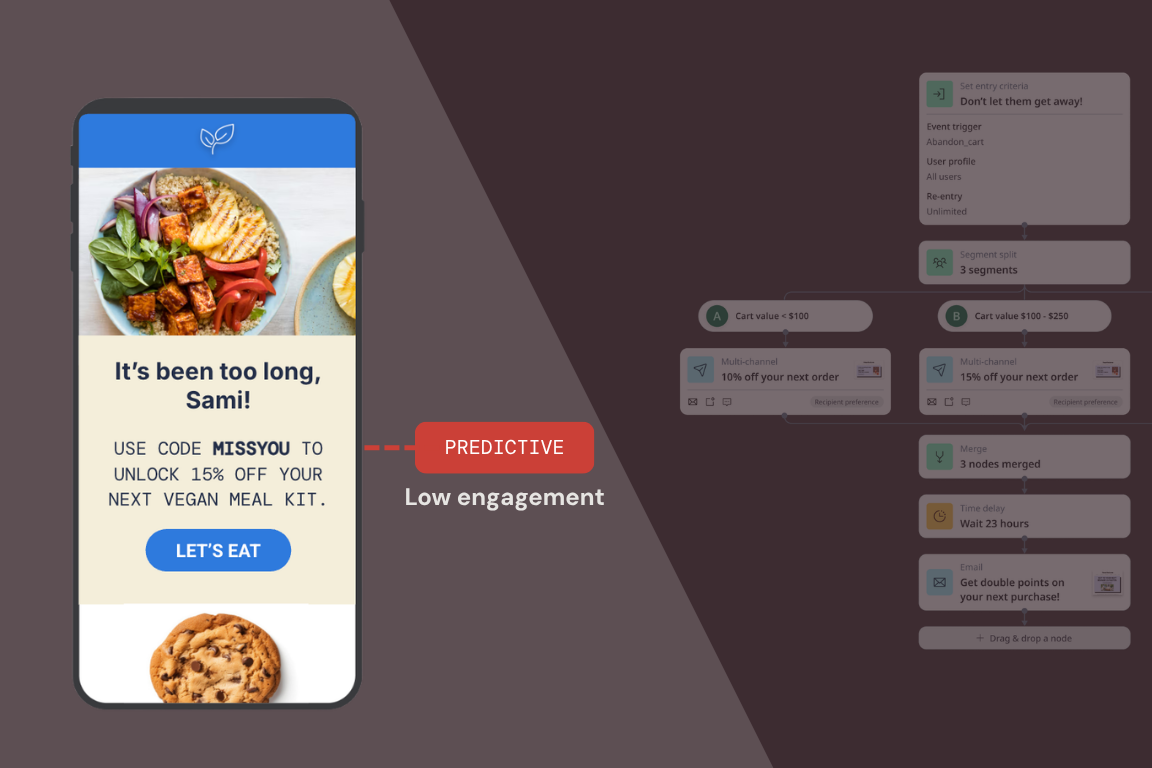
7 lifecycle best practices for data-driven marketers
Customer lifecycle journeys are one of the most powerful tools in a marketer’s arsenal. They’re also one of the most commonly underbuilt. Most teams have some version of a welcome series, a cart abandonment flow, maybe a win-back program. But stringing together a few automated emails isn’t lifecycle orchestration — it’s a starting point.
The brands that consistently outperform on retention, conversion, and customer lifetime value (LTV) share a common trait: they treat lifecycle journeys as a data strategy, not just a messaging strategy. The channels and the copy matter, but what separates good journeys from great ones is the intelligence underneath them.
Here are seven best practices for data-driven marketers building enterprise-grade customer lifecycle journeys that actually move the needle.
1. Map the lifecycle to business outcomes, not just key customer moments
Many lifecycle journey frameworks start with the customer: awareness, consideration, purchase, retention, loyalty. That’s a useful mental model, but it’s incomplete as a strategy. Before you build a single flow, map each lifecycle stage to the specific business outcome you’re trying to drive.
Onboarding isn’t just about welcoming a new customer — it’s about accelerating time-to-first-value and reducing early churn. A retention program isn’t just about staying top of mind — it’s about increasing purchase frequency among customers with high predicted LTV. A win-back journey isn’t just about re-engagement — it’s about identifying which lapsed customers are worth the acquisition cost of winning back, and which ones aren’t.
When every journey program has a defined business outcome (and a measurable conversion goal tied to it), prioritization becomes clearer, reporting becomes more meaningful, and the whole organization gets aligned on what “success” actually means.
💡 Practical starting point: For each lifecycle stage your team owns, write down the single most important conversion event that signals success. Build your journey entry, branching logic, and exit criteria around that event first.
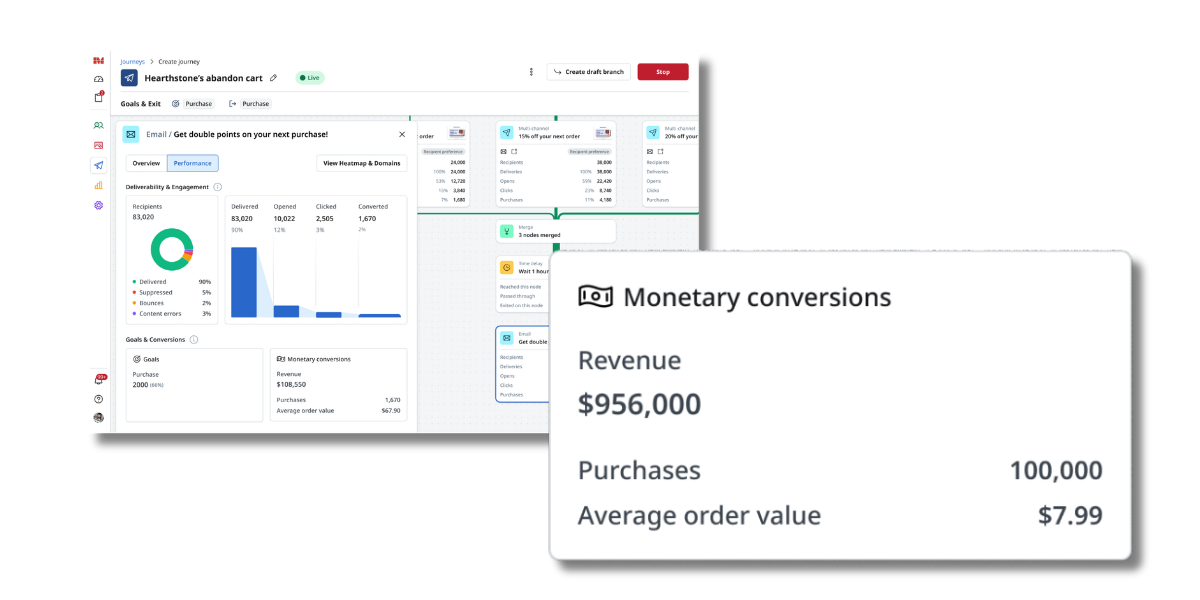
2. Build entry criteria from your full customer data model
Teams leave the most performance potential on the table when it comes to journey entry logic. A user might enter a journey based on their signup date, a specific purchase event, or a segment tag. This works for simple programs, but it quickly breaks down at the enterprise level where mapping all of your campaign workflows inevitably comes with a new level of complexity.
The most effective lifecycle journeys use multi-dimensional entry criteria that reflect how customers actually behave. That means building audiences with layered logic, combining things like behavioral signals (what they’ve done recently), predictive attributes (what they’re likely to do next), transactional history (what they’ve bought and when), and operational data (what’s happening in their account right now).
A customer who “signed up 30 days ago” looks very different from a customer who “signed up 30 days ago, has made at least two purchases, has a predicted LTV in the top quartile, AND browsed a high-margin category three or more times this week.” Both might enter your onboarding journey under a simple date-based rule. Only one of them should.
The richer your entry criteria, the more precisely you can match the right journey to the right customer at the right moment — which means higher conversion rates and less message fatigue for everyone else.
💡 Practical starting point: Audit your current journey entry conditions. Identify one behavioral or predictive signal you’re not currently using and test adding it as an entry qualifier. Measure the conversion rate difference between the filtered and unfiltered cohorts.
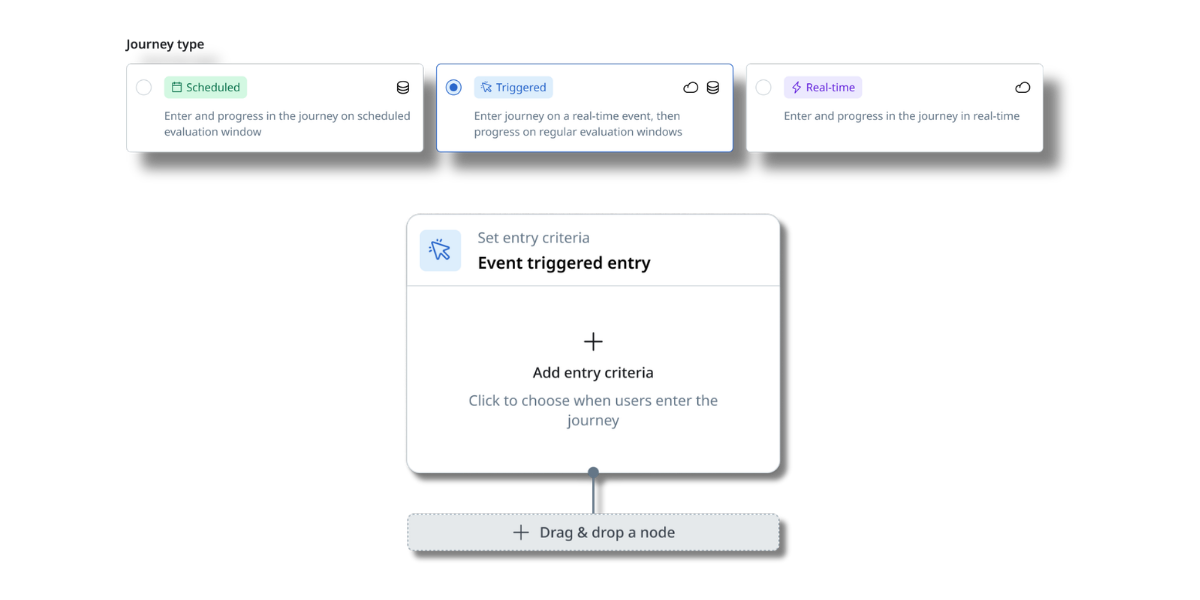
3. Design branches around intent signals, not just time delays
Time-based delays are the most common branching mechanism in lifecycle journeys, and they’re also the least interesting. “Wait 3 days, then send email 2” is a sequence, not an orchestration. Real lifecycle orchestration branches on what customers actually do (and don’t do) in between messages.
Intent signals are the building blocks of intelligent journey branching. A loyalty member who redeems a reward this week shouldn’t receive the same next-step message as one who hasn’t engaged in 60 days. A customer who opens your first onboarding email but doesn’t click is in a different place than one who clicks through and then browses multiple product pages. The journey should know the difference.
Effective branching logic at the enterprise level typically combines:
- Engagement signals: opens, clicks, site behavior, app activity
- Transactional triggers: purchases, returns, account changes
- Predictive scores: churn probability, next-best-action, product affinity
- Suppression logic: customers who’ve already converted, contacted support, or entered a higher-priority journey
The more granular your branching logic is, the more tailored each step will feel. Even when it’s running at scale across millions of customers, your journey should seem like a 1:1 experience to every recipient.
💡 Practical starting point: Pick your highest-volume lifecycle journey and identify the step with the biggest drop-off. Add one behavioral branch at that step (e.g. a “did they do X in the last 72 hours?” condition), and route non-engagers to a different message or channel. Measure lift.
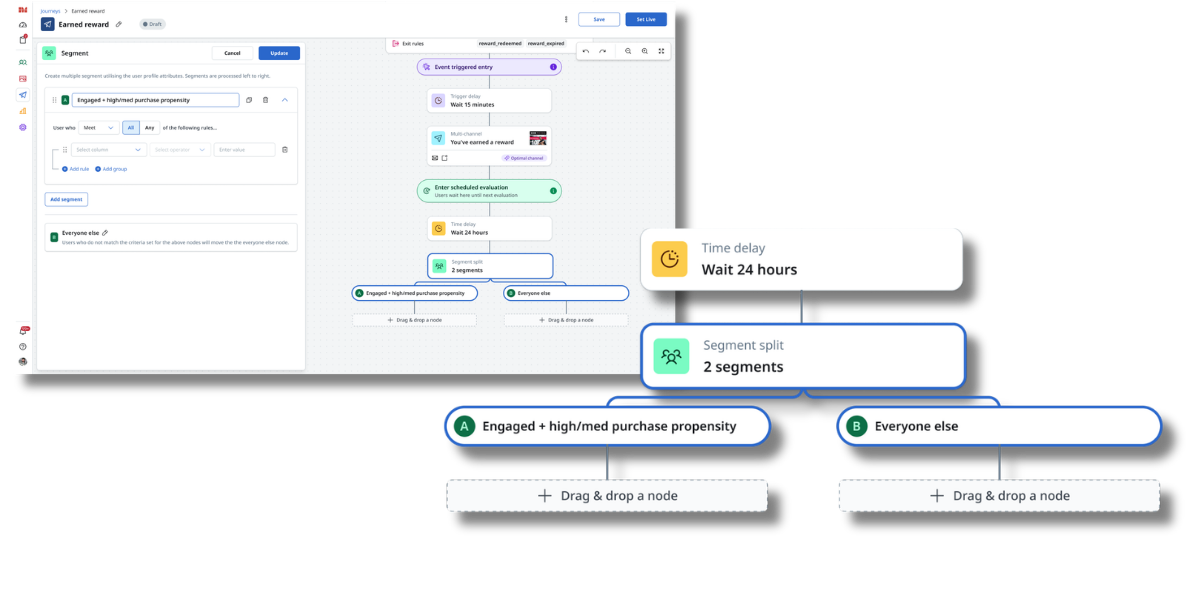
4. Treat channel selection as a data decision, not a default
Many lifecycle marketers default to email as the primary channel, with mobile push or SMS bolted on as secondary options (if at all). That default made sense when email was the only reliable channel in the enterprise toolkit, but it makes less sense now — and it throws away significant conversion opportunities.
Channel selection should be driven by the same data that informs every other journey decision: what do you know about this specific customer’s channel preferences, engagement history, and the nature of the message you’re sending?
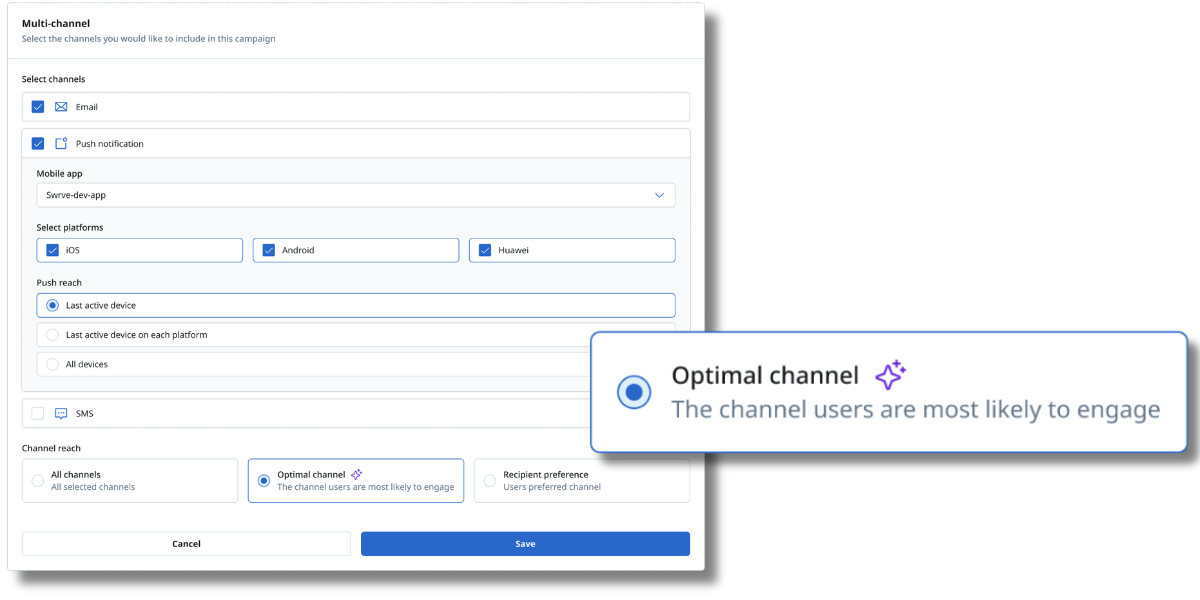
A transactional alert or a time-sensitive offer may perform significantly better as an SMS than as an email for a specific segment of your audience. A re-engagement message for a lapsed customer who has never opened an email but has a high app engagement score might belong in a push notification, not a new email send. A loyalty milestone moment might warrant an email and a push notification, coordinated rather than duplicated.
The key word is coordinated. Cross-channel lifecycle journeys should orchestrate all your channels within a single flow, using preference data and engagement history to inform which channel fires when. Running parallel channel programs that don’t speak to each other is one of the quickest ways to annoy your customers.
💡 Practical starting point: Pull engagement rate data by channel for your top three lifecycle journeys. Identify the segment of customers with low email engagement but above-average app or SMS engagement. Build a branch that routes that segment to their preferred channel and compare conversion outcomes.
5. Personalization should be context-rich
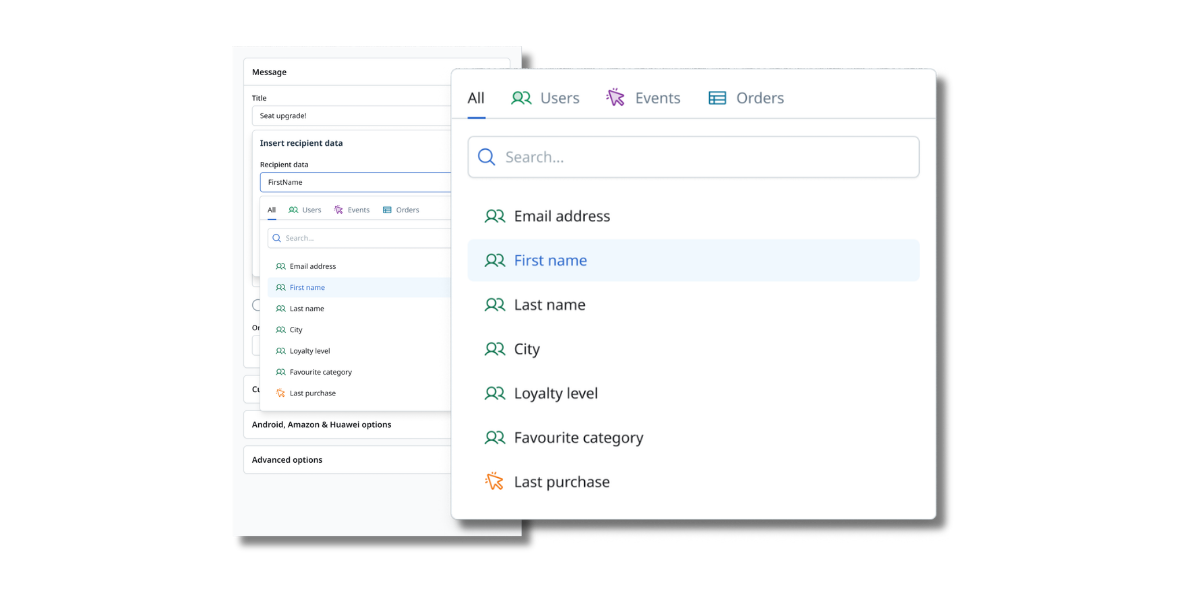
Personalization in lifecycle journeys is frequently conflated with dynamic content — swapping in a first name, a product recommendation, or a location-based offer. Those things matter. But for enterprise brands with rich customer data, they represent a fraction of what’s actually possible.
Deep personalization means building message content, timing, cadence, and channel selection around what you know about each customer’s individual behavior, preferences, and predicted needs. It means using:
- Behavioral personalization: referencing what a customer has actually done, not just who they are
- Predictive personalization: surfacing content, offers, and recommendations based on what they’re statistically most likely to do next
- Contextual personalization: timing messages around real events in a customer’s relationship with your brand, not just a calendar schedule
- Transactional personalization: using purchase history, loyalty status, and account data to make every message feel specific rather than segmented
The ceiling on personalization depth is usually set by data access, not creative ambition. Marketers who can reach their organization’s full customer data model across behavioral, transactional, predictive, and operational sources can personalize in ways that marketers constrained to a synced subset of profiles simply cannot.
💡 Practical starting point: Identify one journey where your personalization is currently limited to basics like first name and product recommendation. Audit what additional customer intel exists in your organization’s central data warehouse that could inform the message — loyalty tier, recent support interaction, predicted churn score — and prototype a more contextually personalized variant.
6. Build experimentation into the journey architecture from the start
Experimentation often happens as an afterthought in lifecycle journeys: a one-time A/B test on a subject line, a holdout group added after the program is already live, a gut-feel content swap when performance dips. That approach generates isolated data points but doesn’t build compounding performance improvement over time.
Enterprise teams that consistently improve lifecycle journey performance treat experimentation as an architectural decision, not an occasional activity. That means:
- Define conversion goals before launch: know what you’re optimizing for from day one
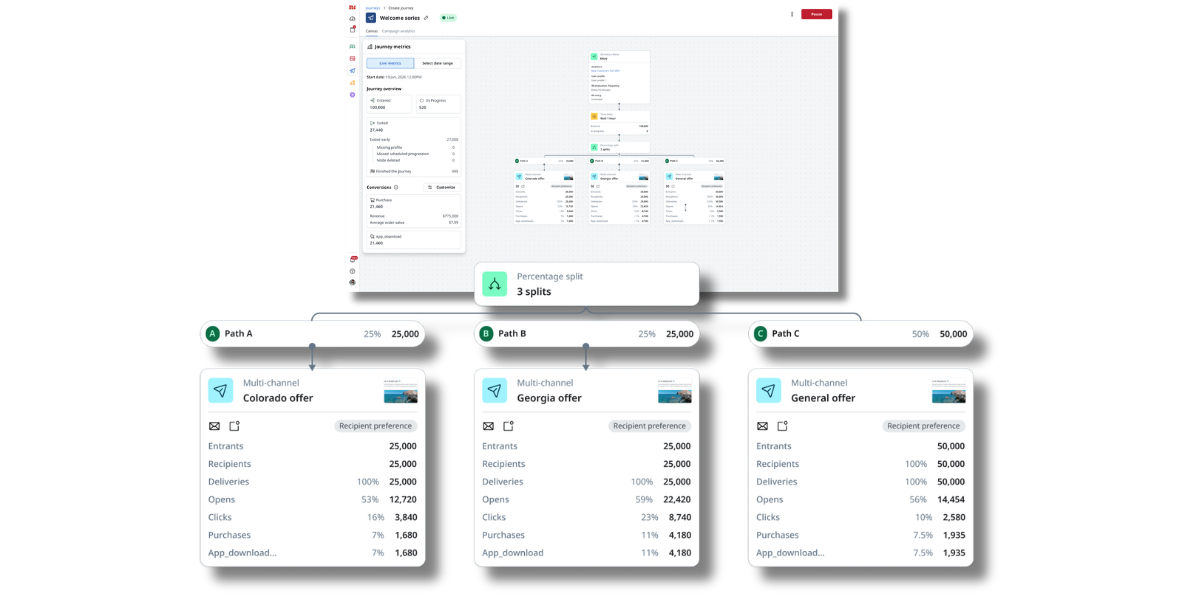
- Build test nodes into the journey canvas: test content variants, branch paths, send timing, and channel routing — not just top-of-funnel messages
- Size your holdout groups with intention: this helps isolate the impact of the journey itself from organic customer behavior
- Document what you learn: experiments should inform your next campaign iteration, not just the current one
The best lifecycle journeys are never finished. They’re running experiments continuously, using real-time performance data to identify what’s working at each step and shifting resources toward it.
💡 Practical starting point: Before your next journey launch, define three specific hypotheses you want to test in the first 90 days. Build the test structure into the journey architecture from the start, rather than adding it after go-live.
7. Close the loop: make sure journey data flows back to your team
This is the best practice that’s most likely to be skipped, even by enterprise teams. But it’s the one that compounds the value of every other item on this list.
When a lifecycle journey runs, it generates a significant amount of intelligence: who entered, who engaged, who converted, who dropped off, which branch performed better, what messages are landing, which channel drove the most downstream revenue. That data is only as valuable as your team’s ability to act on it. And in most enterprise environments, journey execution data lives in the marketing platform that runs the journey — not in the data infrastructure that the analytics, BI, and data science teams actually use.
The result: marketers are optimizing against vendor dashboards that don’t match the numbers the data team is reporting. Attribution conversations become political. The ML models that power your predictive scores don’t get updated with the outcomes they need to improve. And the institutional knowledge generated by six months of journey testing evaporates every time someone exports a CSV.
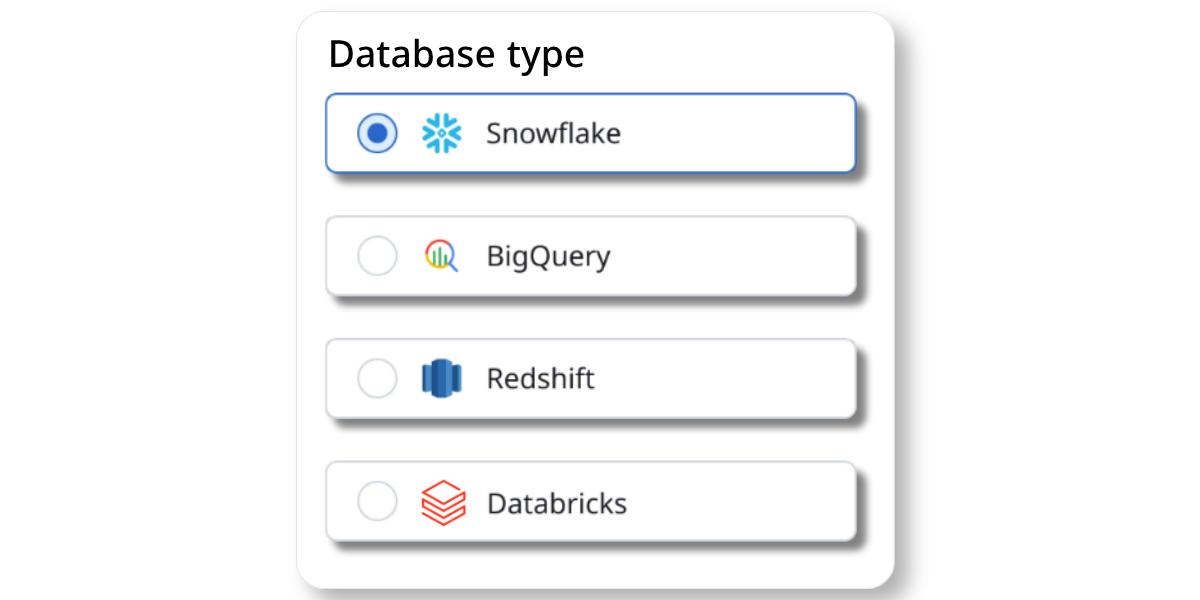
Closing the loop means ensuring that journey execution data writes back to the same data infrastructure your broader team uses — so that marketing outcomes, customer behavior, and downstream analytics are all working from a single source of truth. When that happens, your lifecycle journey program stops being a marketing function and becomes an organizational asset.
💡 Practical starting point: Map where your journey execution data currently lives and who has access to it. Identify which teams (data science, BI, finance, etc.) would benefit from being able to query it directly. That gap is your architectural priority.
The common thread
Look across these seven best practices and a pattern emerges: the brands building lifecycle journeys that consistently convert aren’t just better at marketing. They’re better at using their data. They’ve closed the gap between what their data team knows and what their marketing programs can act on.
That gap is primarily an architectural problem. It’s the reason personalization stops at limited attributes, entry logic defaults to simple segmentation rules, analytics get siloed in vendor dashboards, and experimentation never compounds. Solving it requires a platform that treats your data as the engine — not a source to copy from.
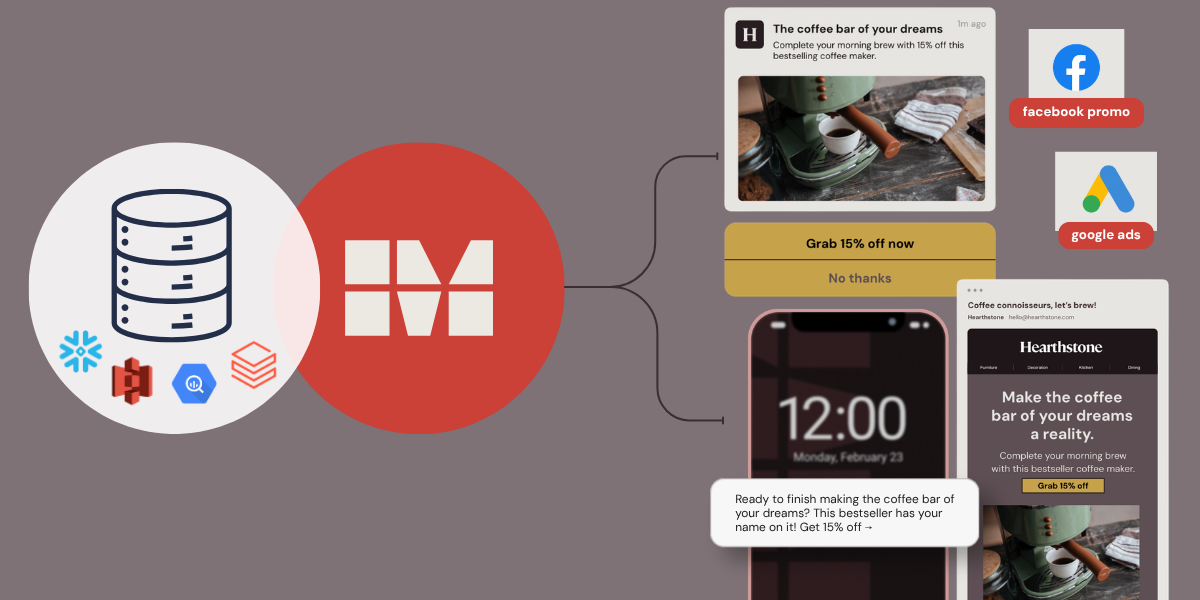
For enterprise teams ready to close that gap, MessageGears is built specifically to solve that problem. Our warehouse-native journey orchestration runs against your full customer data model, without moving a single byte. See what lifecycle orchestration looks like when it runs from your warehouse.