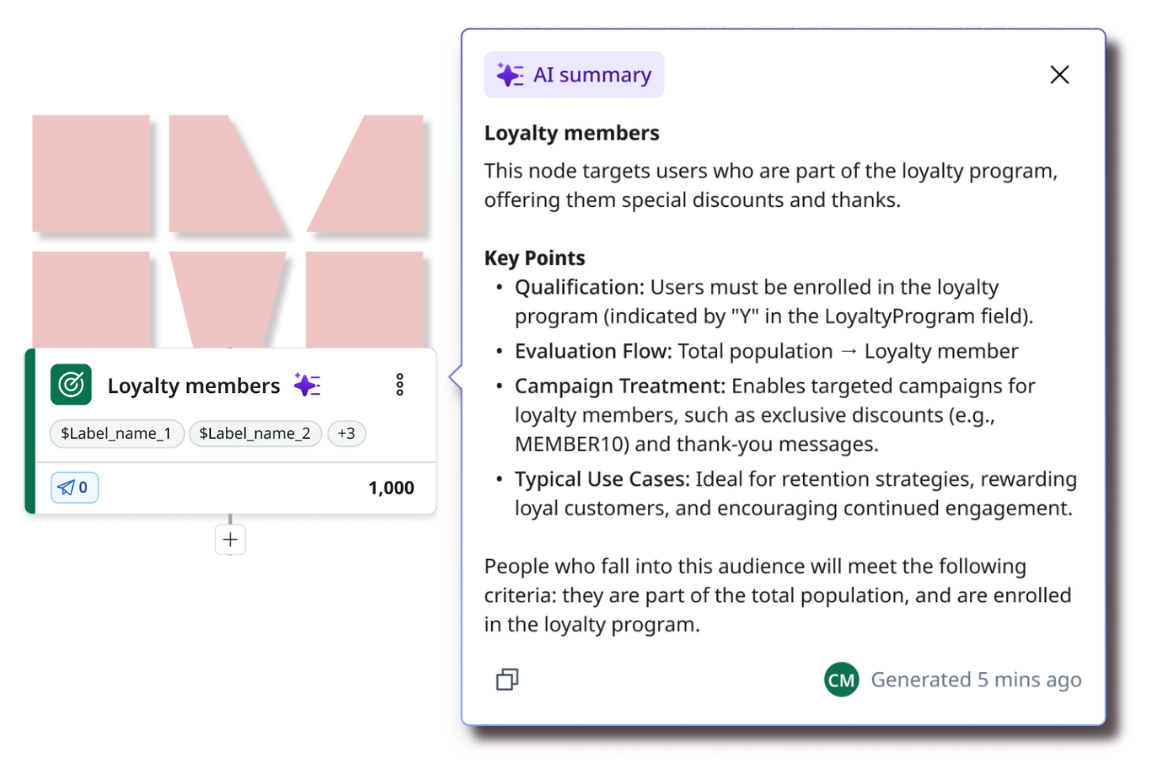
Wish everything in your marketing platform had a TL;DR?
Self-documenting martech transforms an org’s collection of complex, technically opaque marketing assets into an intuitive, self-explanatory workspace. AI summaries in MessageGears make this a reality with concise, plain-language descriptions that automatically generate directly inside the platform.
Picture this: A lifecycle manager opens a segment they didn’t build. The audience name is vague. The SQL is layered. The person who created it left the company eight months ago. So they do what every marketer does… open five more segments to compare, ping a data engineer on Slack, wait for an answer, and eventually decide it’s faster to just build a new audience from scratch.
Multiply that moment across a team. Then a quarter. Then an entire enterprise marketing org.
That’s the hidden tax of modern martech, and it’s the problem we recently solved.
Marketers are used to drowning in martech chaos
Enterprise marketing programs accumulate complexity at a rate that only hands-on-keyboard practitioners can truly understand. Audiences built with complex SQL logic, table joins, and nested filtering. Workflows spanning hundreds of nodes and branches. Dynamic personalization maintained across four different channels.
The assets work. But understanding them across a vast network of active campaigns often requires opening each one, digging into the code, tracking down the original builder, or reverse-engineering pieces just to answer a basic question: what does this thing actually do?
The cost shows up everywhere:
- Slower decisions because context lives in people’s heads, not the platform
- Duplicated work because finding the right existing asset is harder than building a new one
- Bottlenecks around the small group of people who actually understand the architecture
- Painful onboarding for every new ops hire, marketer, and data analyst
Marketing teams spend too much time decoding their own stack, but it’s not just a tooling issue. It’s a context gap.
MessageGears now tells you what everything does before you click into it
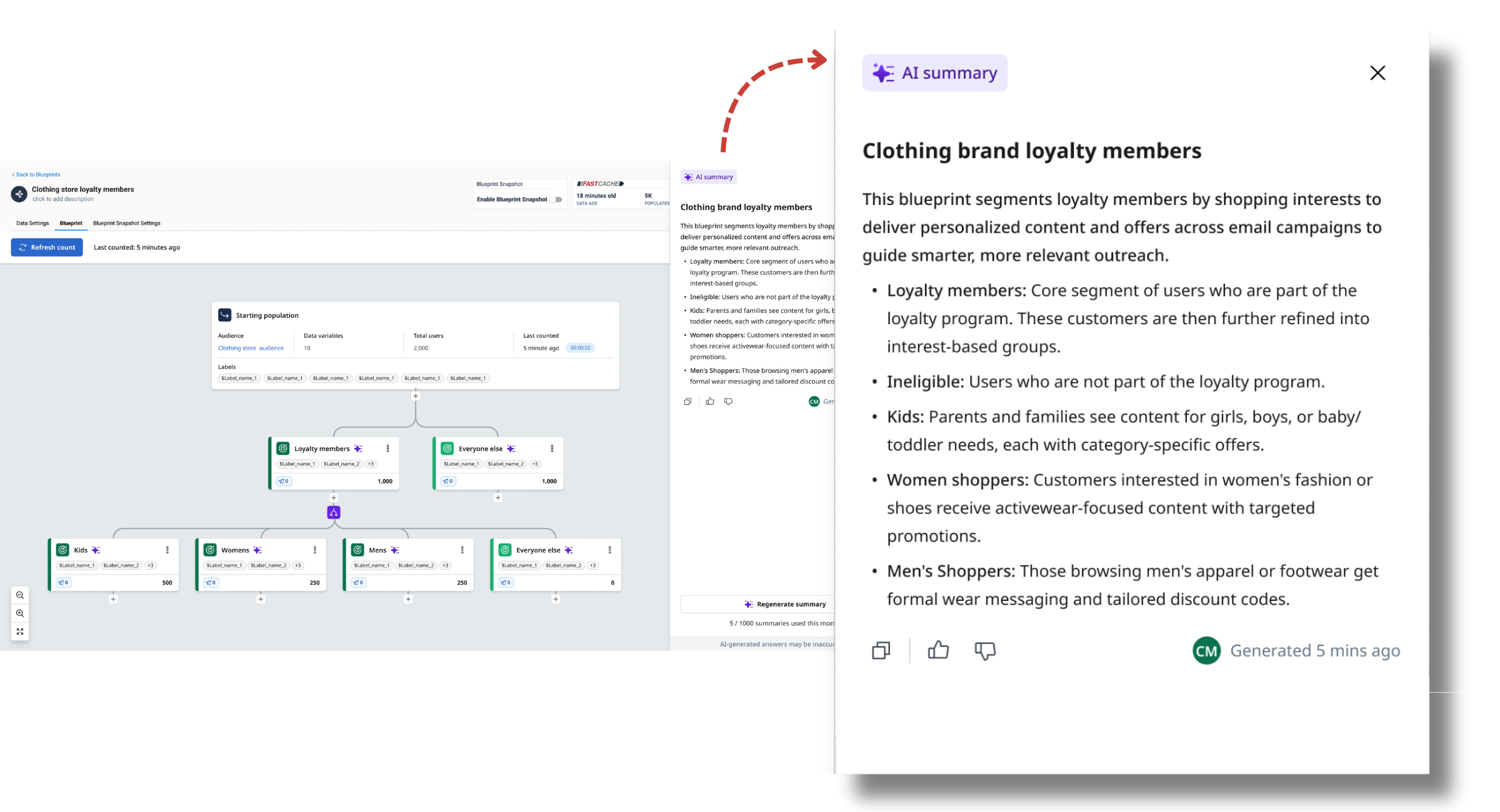
We recently shipped our latest AI feature: self-documenting assets. Every major campaign component now explains itself in plain language – message templates, snippets, audiences, workflows, even the campaign itself.
When you locate an asset, a concise overview description can automatically generate in the background. No prompts. No manual effort. AI summaries are built to be concise and consistent with:
- A TL;DR one-liner capturing the asset’s purpose
- 3-5 bullets covering key themes, logic, or differentiators
- An executive-style takeaway that ties it together
This gives every person on a team, not just the technical builders, instant context on what they’re looking at before they invest time digging in.
What self-documenting martech changes at enterprise scale
A marketer revisiting a nurture series from a year ago gets immediate context. A new ops admin understands what a workflow does for a niche use case without booking time with a senior teammate. A lifecycle manager evaluating reuse vs. rebuild can scan a list view and triage in seconds instead of opening a dozen assets one by one.
This is the kind of friction that doesn’t show up on a quarterly review, but it compounds every single day. Removing it changes how teams operate.
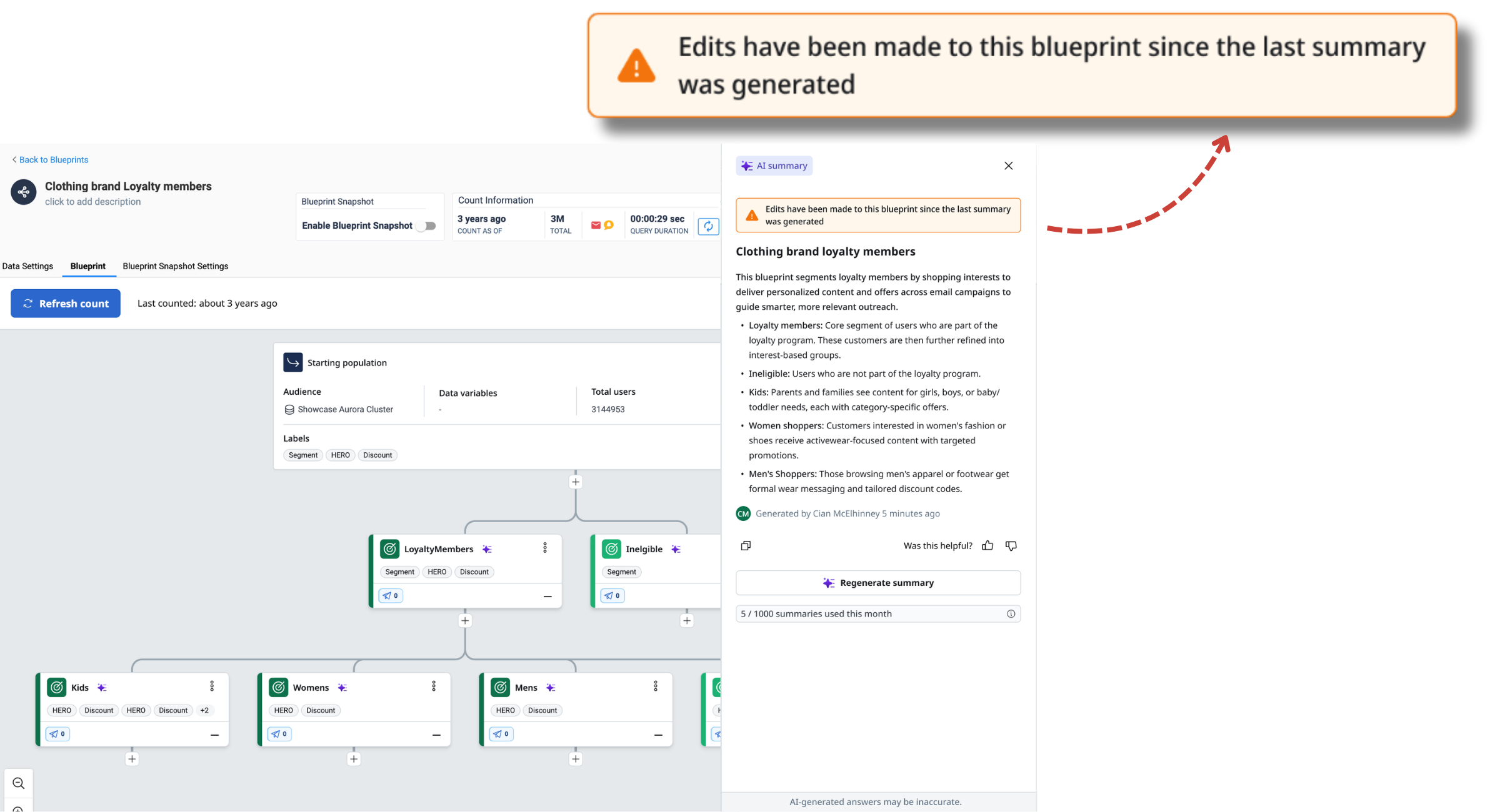
That’s why MessageGears designed self-documenting assets with enterprise governance in mind from the start. AI summaries are short and scannable. A per-instance quota gives organizations visibility and control over generation volume. Every summary can be regenerated on demand, with timestamp and creator attribution on each version, so teams always know how current the context is.
The bigger picture: Context is what makes AI agents useful
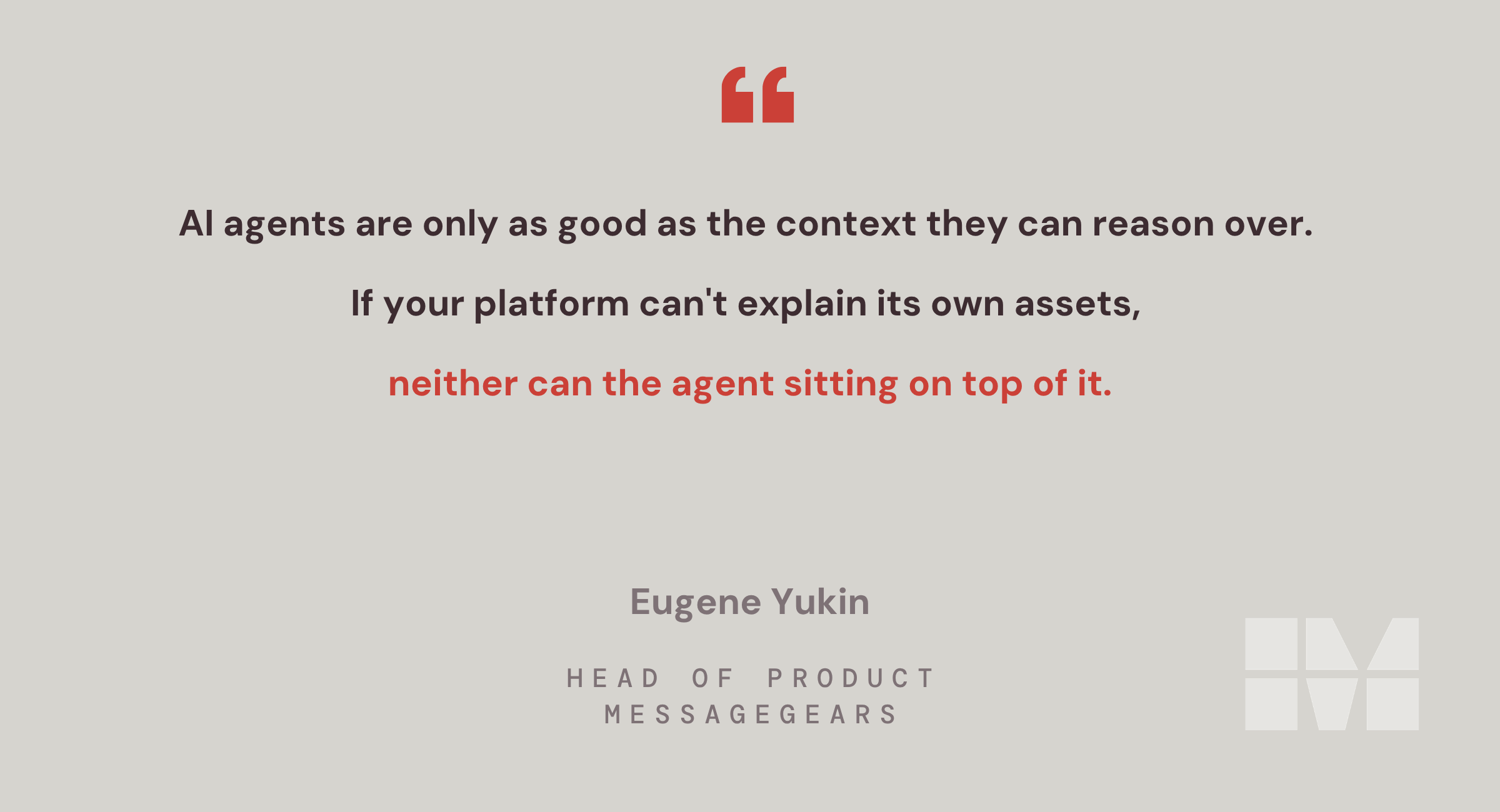
Here’s what we keep coming back to internally: AI agents are only as good as the context they can reason over. If your platform can’t explain its own assets, neither can an agent sitting on top of it.
Self-documenting assets in MessageGears are more than just a productivity feature – they’re infrastructure. Every AI summary becomes a structured, plain-language context layer that anything we ship next can build on top of. Organizations adopting this capability today are establishing the foundation that will make every other AI capability on our roadmap deliver immediate value the moment it’s live – like smarter search, intelligent discovery, and agentic copilots that you’ll actually want to use.
That’s the part we’re most excited about.
Built for today, designed for what’s coming
AI summaries are now available across all major asset types in MessageGears. Along with existing capabilities like content generation and predictive analytics, these intelligent assets are simply the latest addition to MessageGears’ growing suite of AI tools. Once a brand turns it on, AI summaries work automatically. There’s nothing to configure to start seeing benefits.
And it truly lays the groundwork for deeper AI capabilities we’re building. We’ll have more to share on what’s coming in the weeks ahead.
If your team is feeling the weight of martech complexity – the asset sprawl, the onboarding drag, and the dependency on a handful of people who hold all the context – we’d love to show you what using MessageGears looks like in practice.

Koertni Adams Head of Marketing
Koertni leads marketing strategy across campaigns, channels, and product releases at MessageGears. A lot of her work focuses on educating enterprise teams about the real-time, AI-ready infrastructure that modern customer engagement demands – and why it’s high time to move on from legacy martech systems that feel duct-taped together. With a strong background in content and product marketing, Koertni loves translating jargon into “street speak” everyday language, often finding herself as the link between technical and creative teams. Outside of work, Koertni is a mom of three who spends as much time as she can soaking up the Florida sunshine with her family.