
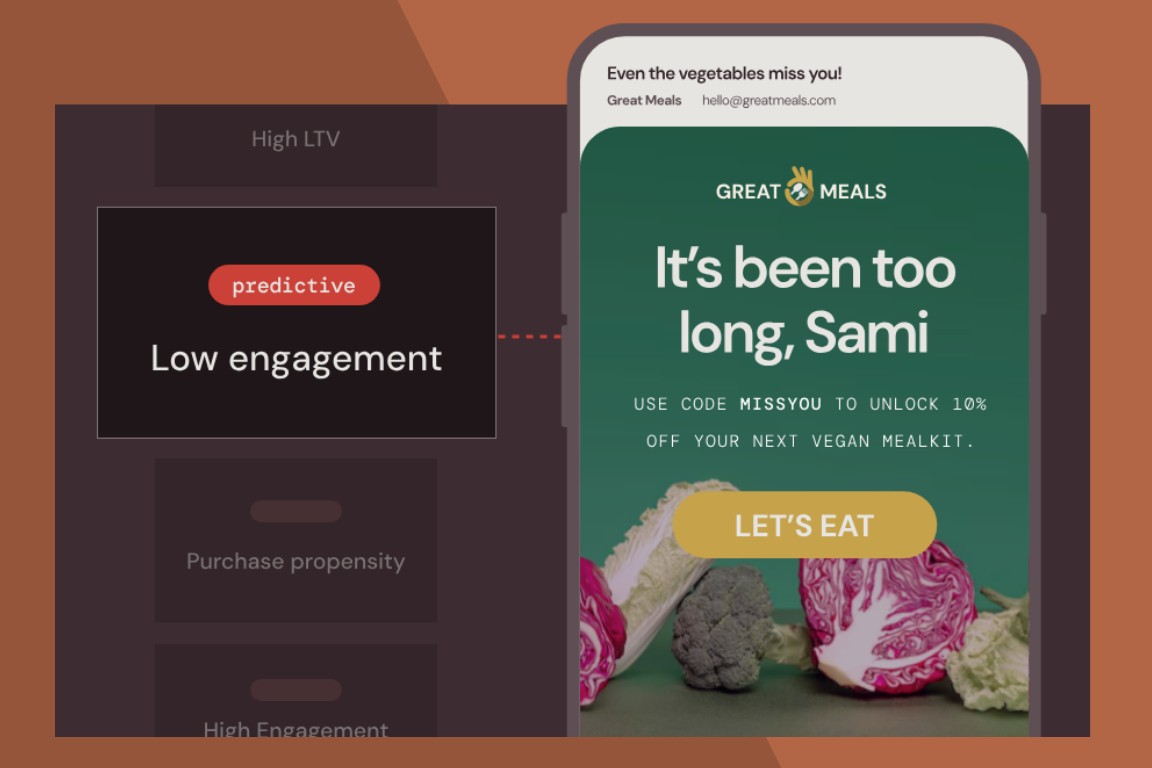
AI in marketing has moved well past the hype cycle. In 2026, the question isn’t whether to use AI — it’s which type of AI, applied to which use cases, with which data, and with enough confidence to actually deploy it at scale.
For enterprise marketers, the opportunity is significant: AI can identify customers most likely to purchase or churn, personalize content at the individual level, optimize send times automatically, and surface insights that would take a human analyst days to compile. But the brands getting the most out of AI are the ones who’ve gone beyond experimentation and connected their AI models directly to their full customer data — not samples or copies of it.
The predictions about where AI is heading are endless, but it’s clear that more and more brands are seeing real, measurable success with it. This article breaks down the types of AI that matter most for enterprise marketing, the specific predictive models that drive real results, and how to start putting them to work.
What types of AI are used in marketing?
Before diving into tactics, it helps to understand the three main categories of AI in marketing — because they serve very different purposes.
Generative AI creates content: email copy, subject lines, ad creative, product descriptions, landing page variations, and more. Tools like ChatGPT, Claude, and Gemini fall into this category. Generative AI is most useful for accelerating content production and A/B test variation creation, though it requires human oversight to ensure brand voice and accuracy.
Conversational AI powers chatbots, virtual assistants, and real-time customer interactions. Using natural language processing (NLP), these systems can answer product questions, recommend items, and guide users through purchase decisions — all at scale.
Predictive AI uses historical and real-time behavioral data to forecast future customer actions. It answers questions like: Who is most likely to buy this week? Who is about to churn? What product should I recommend next? For enterprise marketers focused on revenue impact, predictive AI delivers the most measurable ROI of the three.
The bottom line is that AI is transforming how marketers make decisions. The rest of this article focuses mostly on predictive AI and the specific models that sophisticated marketers are seeing success with.
Why do so many brands still struggle to use AI effectively?
Despite widespread awareness, most marketing organizations still aren’t getting full value from AI. Common barriers include:
- No clear use case definition. AI is most valuable when it’s applied to a specific problem with measurable success criteria. Without that, teams end up with models that don’t connect to business goals.
- Incomplete or siloed data. AI models are only as good as the data that trains them. Brands that have fragmented customer data — spread across CDPs, data warehouses, and point solutions — end up with predictions that don’t reflect reality.
- Disconnect between data and activation. Even when models produce accurate predictions, many teams can’t act on them quickly enough because there’s too much latency between insight and execution.
- Undefined AI governance. Privacy regulations, consumer trust concerns, and internal risk management all require a clear framework for how AI is used, what data it touches, and how decisions are made.
“AI modeling is only as good as the data that’s used to model against it. We firmly believe that having access to all customer data is going to help marketers drive more revenue with AI — and MessageGears is the only customer engagement platform uniquely designed to do that.” — Nathan Remmes, CEO, MessageGears
The brands that overcome these barriers share one thing in common: they’ve built AI on top of direct, real-time access to their full customer dataset, rather than working with copies, aggregates, or delayed syncs.
10 predictive AI models enterprise marketers use today
Predictive AI assigns a score or probability to each customer based on the likelihood of a specific behavior. Those scores can then trigger personalized messages, adjust campaign timing, inform segment selection, and more — automatically and at scale. Companies excelling at personalization generate 40% more revenue thanks to tactics like these.
Here are the ten models with the greatest impact for enterprise marketing teams.
1. Send time optimization
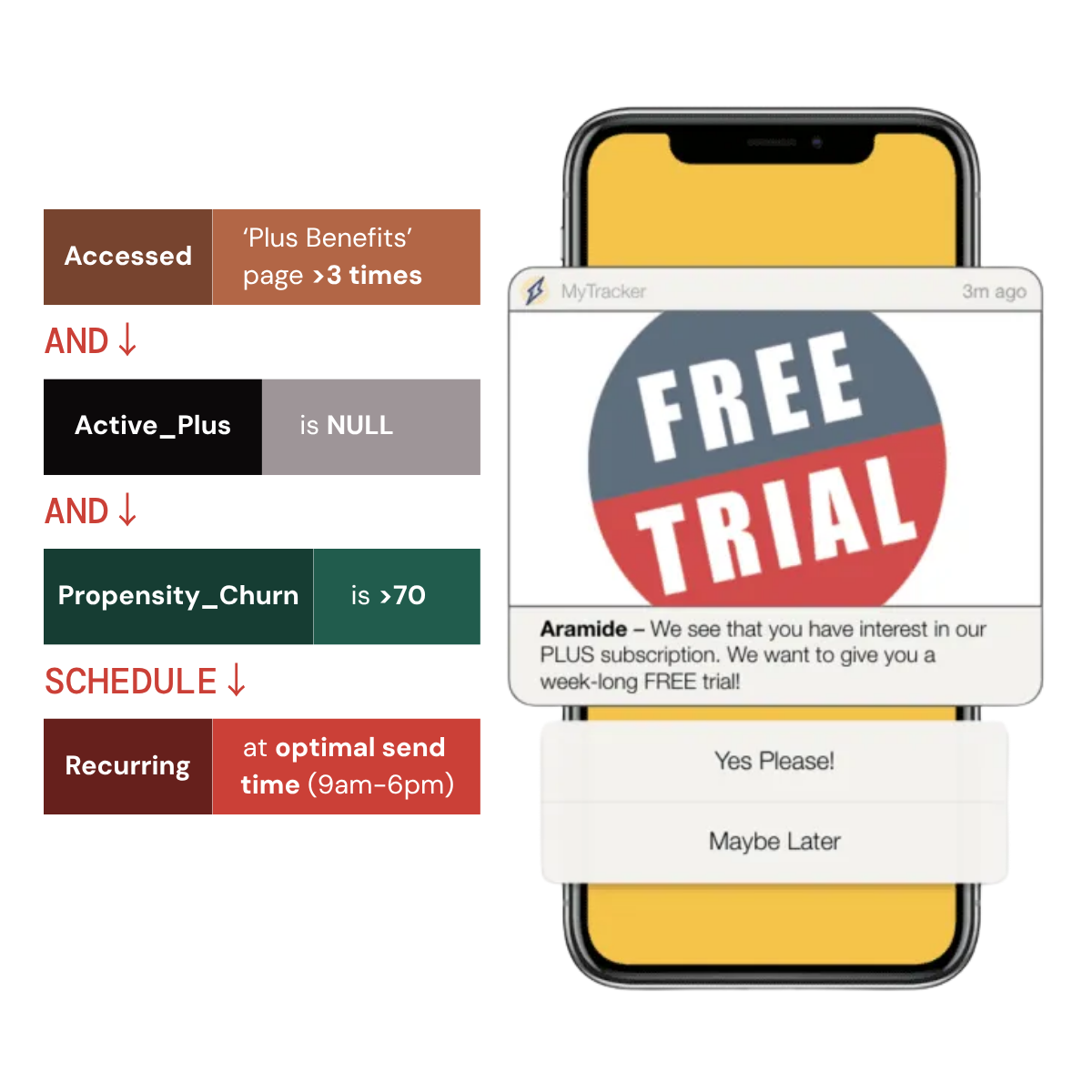
Predict the time of day each customer is most likely to open and engage. Rather than sending everyone a campaign at 10 a.m. on Tuesday, each customer receives that message at the moment they’re statistically most receptive. This model is especially effective for email and push notifications, where inbox competition is high.
2. Day-of-week optimization
Similar to send time, this model predicts the best day of the week for each customer. Engagement windows vary significantly by industry, demographic, and individual behavior — which means brand-specific data almost always outperforms industry benchmarks here.
3. Next best channel
Predict which channel — email, SMS, push, in-app, paid media — is most likely to drive a conversion for each customer. A win-back campaign that routes each customer to their preferred channel consistently outperforms a single-channel blast, because you’re meeting people where they actually engage.
4. Purchase propensity
Score each customer by their likelihood to purchase within a defined window. This model powers more precise targeting for promotional campaigns, allowing marketers to concentrate spend on customers who are already leaning toward a transaction — and avoid wasting budget on those who aren’t.
5. Customer lifetime value (LTV)
Predict the long-term revenue a customer is likely to generate. LTV modeling lets you design loyalty programs, pricing tiers, and upgrade paths with a clear picture of which customers are worth the highest investment. It also informs how aggressively to compete for acquisition of similar profiles. AI-powered predictive models have been seen to outperform historical LTV calculations by 25–40%.
6. Churn propensity
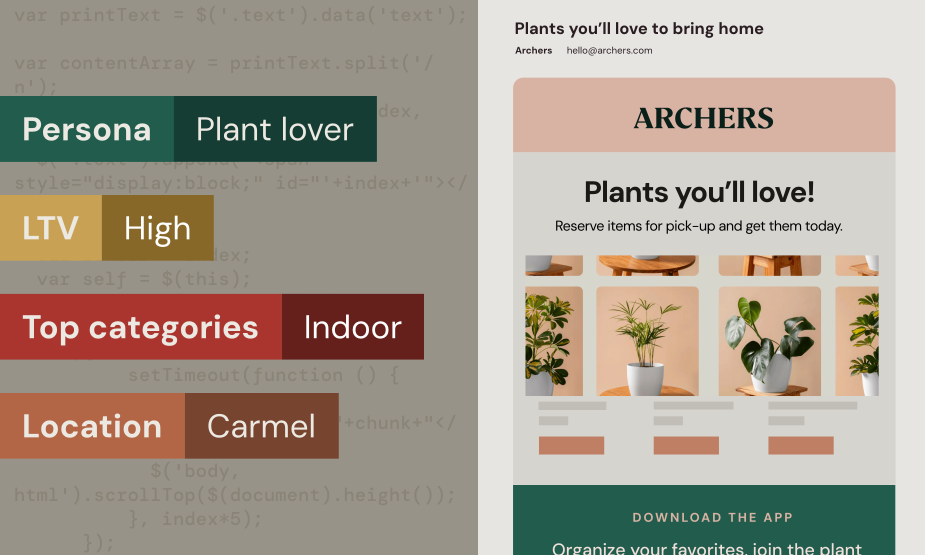
Identify customers showing early signals of disengagement before they leave. With churn risk scores, you can trigger proactive win-back campaigns, personalized incentives, or customer success outreach — before the customer cancels or goes quiet. Even a 1-2% improvement in retention rate has substantial revenue impact at enterprise scale – a 5% retention increase can boost profits by 25–95%.
7. Second purchase likelihood
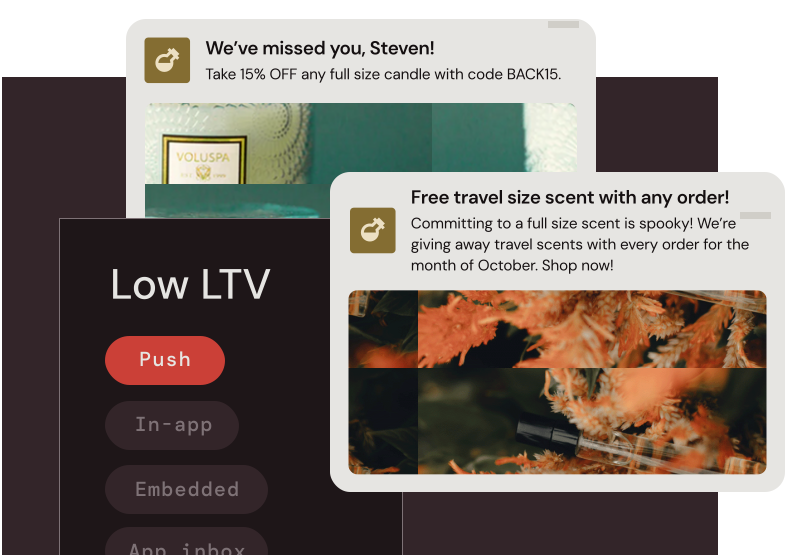
AI can anticipate intent before customers act, and the window between a customer’s first and second purchase is one of the highest-leverage moments in the customer lifecycle. This model scores each new customer’s likelihood to buy again, allowing you to design tailored welcome sequences that nudge high-probability customers toward that second transaction while their intent is still warm.
8. Product recommendations
Leverage purchase history, browsing behavior, and category affinity to serve each customer the most relevant next product. Effective recommendation models go beyond “customers who bought X also bought Y” and factor in recency, price sensitivity, and lifecycle stage.

9. Engagement index
Score each customer’s overall propensity to engage with your brand across channels. This model helps distinguish highly engaged customers who are worth more communication investment from disengaged contacts where continued outreach may accelerate unsubscribes.
10. Contact frequency optimization
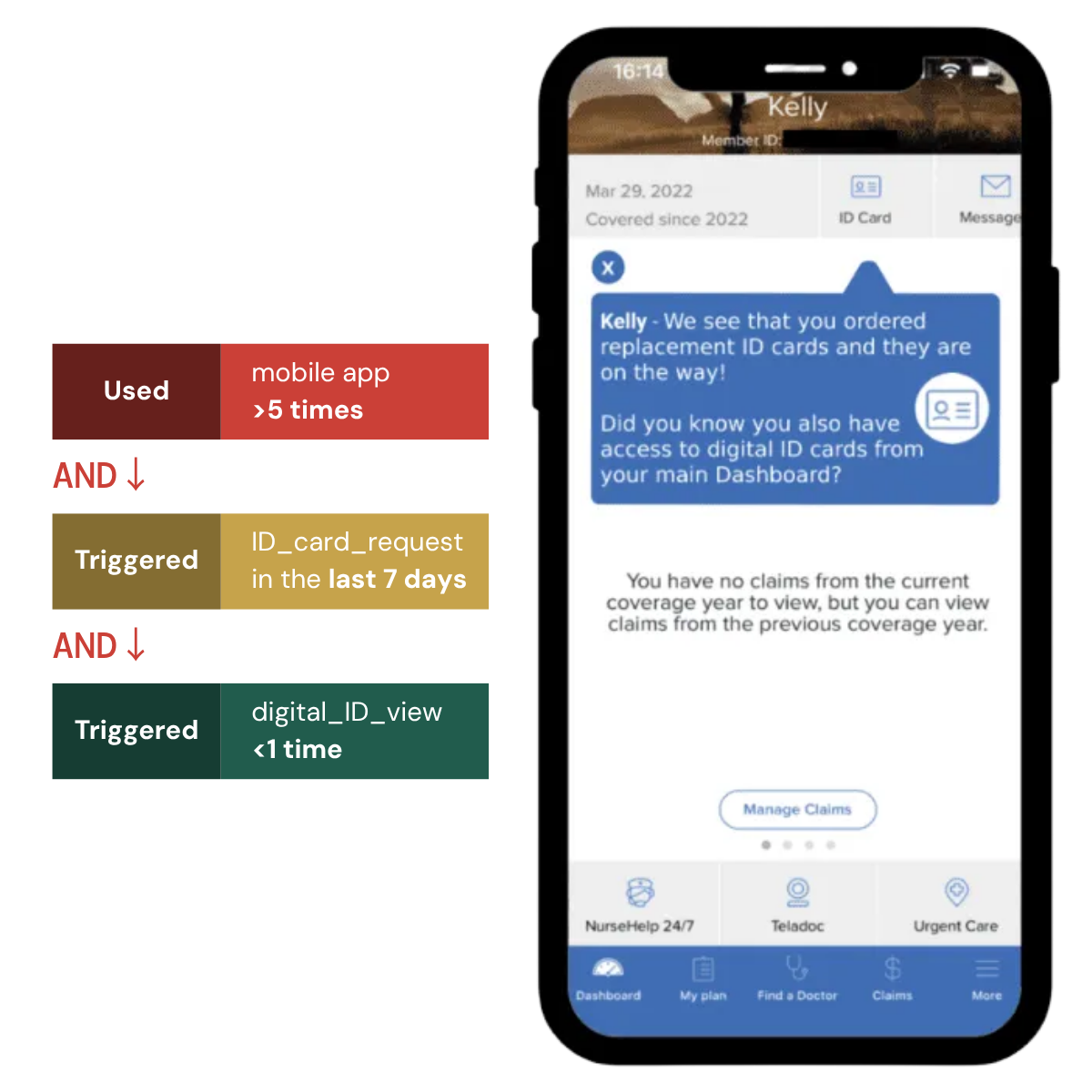
Too many messages increase unsubscribes and spam complaints. Too few miss conversion opportunities. Frequency optimization models score each customer’s tolerance for brand communication, so every individual receives the right volume of outreach — not just the batch average.
How these models work together in practice
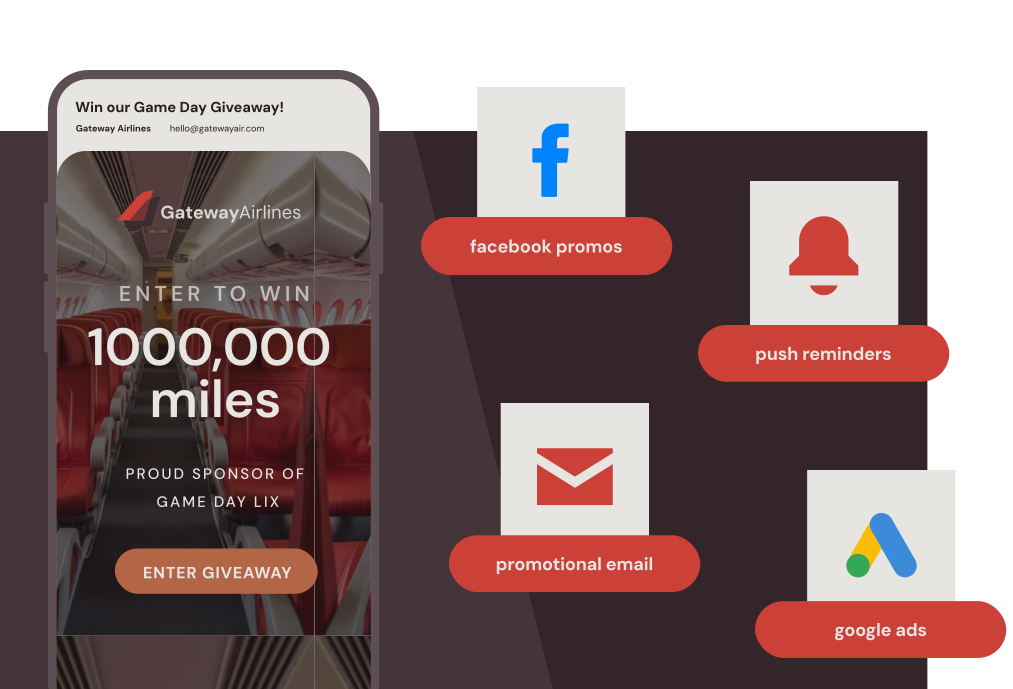
The real power of predictive AI isn’t in any single model — it’s in combining them. A single campaign can simultaneously filter by churn propensity, score by LTV, route to preferred channel, and fire at the optimal send time for each customer. The result is a cross-channel campaign that feels individually relevant to every recipient.
For example: a retailer running a re-engagement campaign might target customers with high churn risk *and* high LTV, exclude anyone whose engagement index has already dropped to zero, deliver the message via their best-performing channel, and send it at each person’s predicted peak engagement window. That’s four models working in concert — and it’s only possible when your AI layer has real-time access to the full customer data powering those scores.
This is where warehouse-native architecture makes a practical difference. When AI models run directly against live data in your cloud data warehouse — rather than against a delayed copy in a separate CDP — every score reflects your customers’ most recent behavior. That matters most for time-sensitive signals like churn risk and purchase propensity, where a few days of latency can mean the difference between saving a customer and losing them.

Getting started with AI for marketing campaigns
The path to sophisticated AI-powered campaigns doesn’t require a multi-year implementation. Marketers can start with one or two high-impact models — send time optimization and churn propensity are common entry points — and expand from there as they see results.
What does require investment is the data foundation. AI models trained on incomplete, stale, or siloed data will underperform. The brands seeing the best results are those who’ve made direct access to their full customer dataset a prerequisite for their AI strategy, not an afterthought.
MessageGears is built for exactly this. As the only customer engagement platform with warehouse-native data access, it gives enterprise marketing teams the ability to build, deploy, and act on AI models using their complete, live customer data — without copies, delays, or data movement.